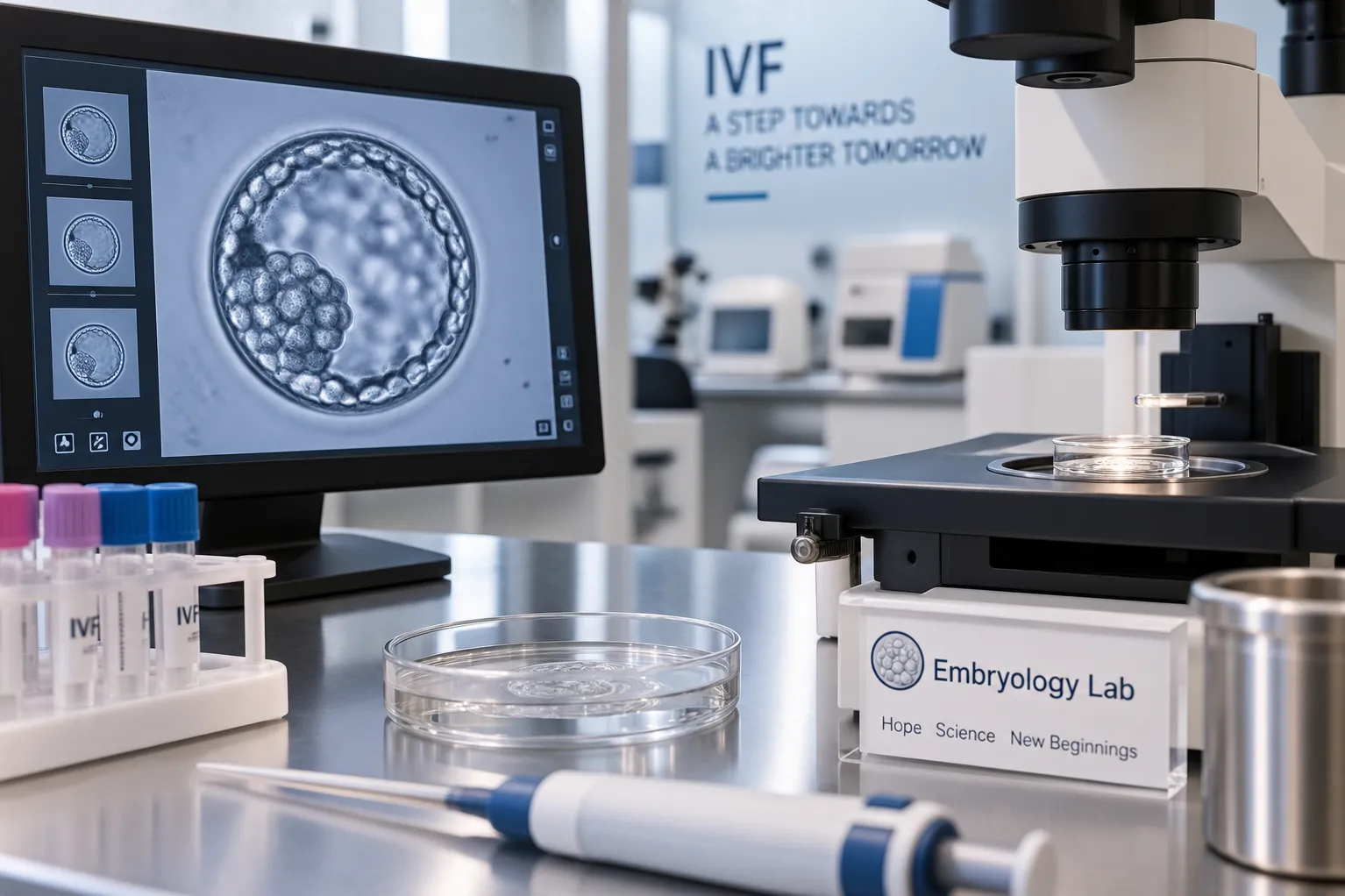
One of the decisions that may arise during IVF concerns how long embryos are cultured before transfer. Some embryos may be cultured to the blastocyst stage, which typically occurs several days after fertilisation.
A blastocyst transfer involves transferring an embryo that has reached this more advanced developmental stage into the uterus. It can be appropriate in selected IVF cycles, but the decision depends on embryo development and the individual treatment situation.
What Is a Blastocyst?
After fertilisation, an embryo undergoes a series of cell divisions.
During the following days, embryos that continue developing may reach the blastocyst stage. At this point, the embryo has developed a more complex cellular structure.
Not every fertilised egg develops into a blastocyst.
This natural developmental attrition is one reason embryo culture needs careful laboratory monitoring.
Why Might Blastocyst Culture Be Used?
Culturing embryos for additional time provides embryologists with more information about their developmental progression.
When several embryos are developing, reaching the blastocyst stage can provide additional information that contributes to decisions about embryo selection and transfer.
However, longer culture is not automatically the best strategy for every patient.
The number of embryos available, their development, previous fertility history and laboratory considerations can influence the decision.
Fresh or Frozen Blastocyst Transfer
A blastocyst may potentially be transferred within the treatment cycle when clinically appropriate, or a suitable embryo may be cryopreserved for transfer in a subsequent cycle.
A frozen embryo-transfer strategy may be selected for various clinical reasons, including circumstances where transfer during the stimulation cycle is not considered appropriate.
Patients should ask why fresh or frozen transfer is being recommended in their specific situation rather than assuming one approach is universally preferable.
What Happens During Embryo Transfer?
Embryo transfer is generally performed using a thin catheter to place the embryo into the uterus.
The fertility team plans the timing according to embryo development and endometrial preparation.
After transfer, prescribed medication may be continued according to the treatment plan. A pregnancy test is then scheduled after an appropriate interval.
Patients should follow the centre’s specific instructions regarding medications and post-transfer care.
What Should Couples Ask Before Transfer Day?
Useful questions include:
- How many embryos developed after fertilisation?
- Why has blastocyst-stage transfer been recommended?
- How was the embryo selected?
- Is fresh or frozen transfer planned?
- What medication needs to continue afterward?
- What happens to other suitable embryos?
- When should pregnancy testing be performed?
Having these answers before transfer can make the process less confusing.
Selecting IVF Care in Nashik
A good embryo-transfer discussion should involve more than being told the date of the procedure.
Couples should understand how their embryos have developed, why a particular transfer strategy is being used and what the next steps will be.
At Bagul Nursing Home and Dr. Bagul’s Hope IVF Center in Nashik, blastocyst transfer may form part of IVF planning when appropriate to the patient’s clinical circumstances and embryo development.
For couples seeking fertility treatment across Nashik and nearby Maharashtra areas, embryo culture decisions should remain individualized. Reaching the blastocyst stage is one part of a much broader process involving ovarian response, fertilisation, embryo development, uterine preparation and implantation.
Understanding each stage helps couples evaluate IVF care based on clinical reasoning rather than simply on the number of technologies included in a treatment package.
Keywords