A hysteroscopy appointment involves more than inserting a camera: your clinician must confirm the reason for the procedure, exclude pregnancy and infection, choose the anaesthesia plan, and explain whether treatment can happen during the same sitting. By the end, you will know what to arrange before arriving, what happens inside the procedure room, which findings may be treated, and how to recognise recovery problems.
Key takeaways
- Confirm whether the problem is inside the cervix or uterine cavity.
- Share medicines, allergies, pregnancy possibility and infection symptoms before scheduling.
- Ask whether a polyp, fibroid or tissue sample can be treated during hysteroscopy.
- Keep the procedure report and attend follow-up to review pathology results.
What the consultation confirms before hysteroscopy
A hysteroscopy consultation in Nashik confirms whether the problem is inside the cervical canal or uterine cavity and whether direct inspection will change treatment. The clinician reviews bleeding, infertility, miscarriage history, pain, previous procedures, ultrasound or saline-infusion sonography results, medicines, allergies, pregnancy possibility and infection symptoms.
The key distinction is between diagnostic and operative hysteroscopy. Diagnostic hysteroscopy uses a thin camera passed through the vagina and cervix to inspect the cavity. Operative hysteroscopy adds instruments through the scope to remove a polyp or small submucosal fibroid, divide adhesions, retrieve a retained intrauterine device or take a biopsy.
Uterine hysteroscopy in Nashik is not a universal fertility test; it makes sense when a suspected cavity abnormality needs confirmation or treatment.
Ask these questions before agreeing:
- Is the planned procedure diagnostic, operative, or combined with biopsy or polyp removal?
- Why is hysteroscopy preferable to ultrasound, saline-infusion sonography or an endometrial biopsy for my finding?
- If fertility treatment is planned, could treatment during the same sitting delay IVF or embryo transfer?
- Has pregnancy been reliably excluded, and do bleeding or infection symptoms require postponement?
- Does the quoted fee include consultation, imaging, anaesthesia, instruments, biopsy or pathology, medicines and follow-up?
A hysteroscopy is a poor choice when the suspected problem lies outside the uterine cavity, such as blocked fallopian tubes or an ovarian mass; another investigation is needed.
How to prepare for hysteroscopy in Nashik
Good hysteroscopy preparation in Nashik starts with confirming the procedure date, anaesthesia plan and clinic instructions.
1. Ask whether to schedule it soon after your period, when the uterine lining is thinner. Irregular bleeding, hormonal treatment or an urgent concern can change the date.
2. Tell the clinic if pregnancy is possible. Complete the requested urine or blood pregnancy test, or provide reliable confirmation that you are not pregnant; hysteroscopy is not performed during pregnancy. Ask whether to avoid intercourse or use contraception before the appointment.
3. Follow the written fasting instructions. You may need an empty stomach before sedation or general anaesthesia, while office hysteroscopy may have different instructions. Do not rely on generic online advice.
4. Give the clinician a complete medicine list, including blood thinners, diabetes medicines, supplements and painkillers. Report drug allergies, pelvic infection symptoms, abnormal bleeding and previous cervical or uterine procedures.
5. Carry your identity and payment documents, prescriptions, ultrasound scans, blood-test results and earlier treatment or pathology reports. Ask whether a fresh pregnancy test or other test is required.
6. Arrange an adult to accompany you and drive you home if sedation or anaesthesia is planned. Do not drive yourself after either.
Before booking, confirm whether the fee includes anaesthesia, biopsy or pathology, medicines, operative instruments and follow-up; these may be billed separately.
What happens during the hysteroscopy procedure
At registration, the team confirms your identity, medical history, pregnancy status, test reports and planned procedure. You sign consent after the clinician explains whether this is diagnostic hysteroscopy or operative hysteroscopy, including possible biopsy, polyp removal, bleeding, infection and fluid-related risks.
1. You change into a gown and empty your bladder. On the examination table, you lie on your back with your legs supported. A pelvic examination checks the vagina and cervix, while the team prepares the sterile instruments.
2. Anaesthesia depends on the setting and the planned treatment. A brief diagnostic procedure may use no anaesthesia or local anaesthetic; sedation or general anaesthesia is used when cervical passage or treatment could cause discomfort. Confirm who will administer it and whether fasting rules apply.
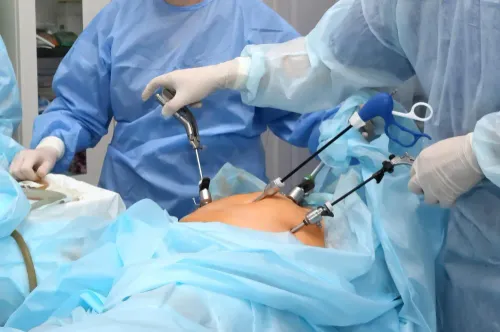
3. The clinician passes a thin hysteroscope through the vagina and cervix into the uterus. Cervical preparation or gentle widening may be needed; the scope does not require a cut through the abdomen.
4. Sterile saline flows through the hysteroscope to expand the uterine cavity. This separates the walls so the camera can show the cervical canal, uterine lining and openings of the fallopian tubes. The team records fluid entering and leaving because excess absorption can cause fluid overload or electrolyte disturbances.
5. The clinician inspects the cavity and passes small instruments through the scope when treatment is planned. A biopsy can be taken, and a polyp, small fibroid, adhesions or retained device can be addressed during the same session. This is the core hysteroscopy procedure process in Nashik, including uterine hysteroscopy in Nashik.
What can be treated during the same procedure
A diagnostic hysteroscopy only inspects the cervical canal and uterine cavity. During operative hysteroscopy, instruments pass through the telescope, so treatment can happen immediately when the finding is suitable and consent covers it. The hysteroscopy procedure process in Nashik should confirm whether removal, tissue sampling, or a separate operation is planned.
Findings that can be treated during the same procedure include:
- Endometrial polyps, which can be cut away and sent for pathology.
- Small submucosal fibroids that project into the cavity, although larger or deeply embedded fibroids may need another treatment.
- Intrauterine adhesions, also called Asherman syndrome, which can be divided.
- A retained intrauterine device when its threads are not visible and removal requires direct access.
- A uterine septum, when correcting it is appropriate and discussed beforehand.
- A suspicious or thickened area, from which the clinician can take a targeted biopsy rather than sampling blindly.
Ultrasound and saline infusion sonography show images; they do not remove the lesion. A biopsy removes tissue for diagnosis, while hysteroscopy shows exactly where the sample comes from.
| Option | Main purpose | What it does not do |
|---|---|---|
| Ultrasound | Image uterus and ovaries | Cannot treat a cavity lesion |
| Saline infusion sonography | Maps the cavity with fluid | Usually cannot remove a polyp |
| D and E | Removes pregnancy tissue | Is not a camera-guided cavity inspection |
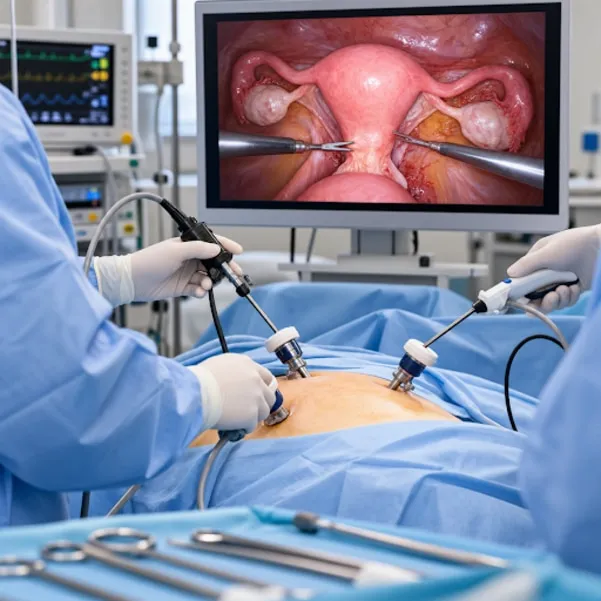
| Laparoscopy | Examines the abdomen and outer uterus | Does not directly inspect the cavity |
| Hysterectomy | Removes the uterus | Is major surgery, not cavity-preserving treatment |
Uterine hysteroscopy in Nashik is therefore more targeted than imaging, but less extensive than hysterectomy.
Hysteroscopy recovery information, reports and follow-up
After diagnostic hysteroscopy, mild cramping, watery or blood-stained discharge, and tiredness can last one to three days. Many patients return to routine activities the same day or next day; removal of a fibroid, division of adhesions, sedation, or complications can extend recovery. Follow the written instructions for bathing, sex, tampon use, exercise and work.
Seek urgent medical help if you have heavy bleeding that soaks one sanitary pad an hour for two hours, severe or worsening abdominal pain, fever of 38°C or higher, fainting, breathlessness, repeated vomiting, inability to pass urine, or foul-smelling discharge.
Before leaving, confirm:
- Whether the procedure was diagnostic or operative, what the clinician saw, and whether a biopsy or tissue removal was done.
- When the pathology report will be ready, how you will receive it, and who will explain an abnormal result.
- The follow-up date, warning signs, prescribed pain relief, and the number to call outside clinic hours.
- Whether the quoted fee includes consultation, ultrasound or other tests, anaesthesia, biopsy or pathology, instruments, medicines and follow-up. Office, day-care and hospital charges can differ.
Useful hysteroscopy recovery information includes arranging an adult to take you home and stay with you after sedation or general anaesthesia; do not drive yourself. During a hysteroscopy consultation in Nashik, ask Bagul Nursing Home & Dr. Bagul’s Hope IVF Center for a written estimate and copies of the operative note, images and pathology report.
Related service
Frequently asked questions
What does a hysteroscopy consultation in Nashik confirm?
It confirms whether symptoms or scan findings involve the cervical canal or uterine cavity and whether direct inspection could change treatment.
How should you prepare for hysteroscopy in Nashik?
Provide your medical history, scan reports, medicines, allergies, pregnancy possibility and infection symptoms, then follow the clinic’s instructions for the planned anaesthesia and procedure.
What happens during a hysteroscopy procedure?
The clinician passes a hysteroscope through the vagina and cervix to inspect the uterine cavity, with treatment or sampling performed when indicated.
What can be treated during the same hysteroscopy procedure?
Selected findings inside the uterine cavity, such as a polyp or suitable fibroid, can be treated during the same procedure when the clinician considers it appropriate.
What hysteroscopy recovery information and follow-up are important?
Ask when you can resume normal activities, which symptoms need urgent attention, when the procedure report will be available and when pathology results will be reviewed.
Related service
Hysteroscopy Hysteroscopy Done for diagnostic as well as therapeutic purpose for patients having conditions such as infertility, abnormal uterine bleeding, post menopausal... |
Keywords