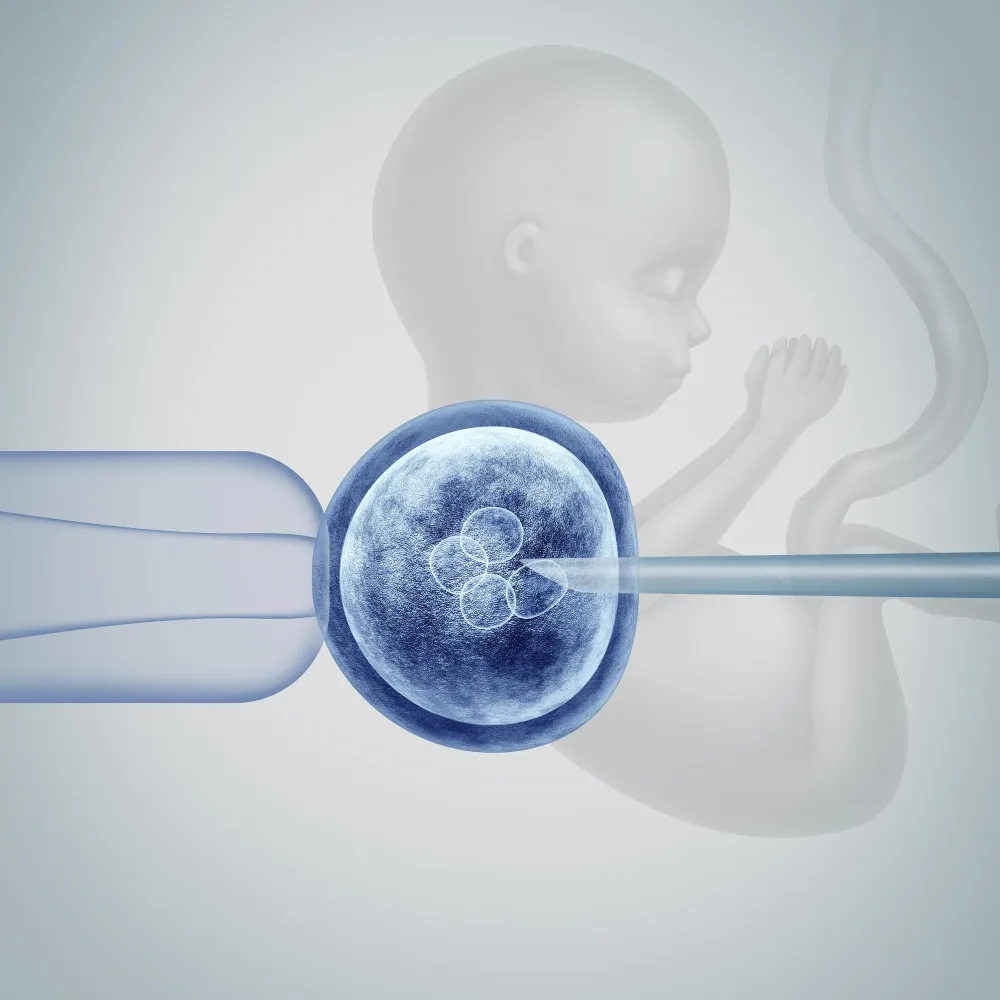
Embryos developing during IVF are surrounded by an outer layer known as the zona pellucida. Before implantation can occur, an embryo normally needs to emerge, or “hatch,” from this surrounding layer.
Laser hatching, commonly discussed as a form of assisted hatching, is a laboratory technique in which specialised equipment is used to create a controlled opening or thinning in the zona pellucida.
The procedure may sound straightforward, but couples should understand an important point: it is an additional embryology technique, not something automatically required in every IVF cycle.
What Is the Purpose of Assisted Hatching?
As an embryo develops, it eventually needs to hatch from its surrounding shell before implantation.
Assisted hatching aims to facilitate this stage by altering a small portion of the zona pellucida under laboratory conditions.
Laser technology allows embryologists to perform this manipulation in a controlled manner.
Who Might Be Considered for Laser Hatching?
The decision should be individualized.
A fertility specialist or embryology team may discuss assisted hatching in selected IVF circumstances based on embryo characteristics, treatment history or laboratory considerations.
However, hearing that the technique exists does not mean it will necessarily improve the prospects of every patient undergoing IVF.
Couples should therefore ask what specific feature of their treatment has led to the recommendation.
Questions to Ask Before Adding Laser Hatching
Before agreeing to an additional laboratory procedure, consider asking:
- Why is assisted hatching being recommended in our cycle?
- What characteristic of the embryo or treatment history is relevant?
- Is it routinely performed or selectively recommended?
- What potential benefit is expected in our circumstances?
- Are there limitations or risks we should understand?
- Will the technique change the embryo-transfer plan?
These questions can be particularly useful when comparing fertility treatment plans from different centres.
More Procedures Do Not Automatically Mean Better IVF
Assisted reproductive technology includes many laboratory techniques, and it is easy to assume that adding more interventions creates a more advanced treatment cycle.
That is not necessarily how individualized fertility care works.
An IVF plan should ideally contain procedures that have a clear reason for being included. For one couple, ICSI may be relevant because of sperm-related findings. For another, a specific embryo culture or transfer strategy may be discussed. Another patient may not require additional laboratory intervention.
The same principle applies to assisted hatching.
Embryo Quality and Implantation Are More Complex
Implantation cannot be reduced to whether an embryo successfully hatches.
Embryo developmental competence, uterine factors, endometrial conditions, maternal age and other biological variables can influence treatment outcomes.
Laser hatching addresses only one particular aspect of the embryo-transfer pathway. It cannot overcome every possible cause of unsuccessful implantation.
How to Evaluate a Fertility Centre Offering Laser Hatching
Couples considering IVF in Nashik should look for a fertility team that can explain when advanced laboratory techniques are useful and, equally importantly, when they may not be necessary.
At Bagul Nursing Home and Dr. Bagul’s Hope IVF Center, fertility treatment planning can incorporate embryology techniques according to individual clinical and laboratory considerations.
For patients from Nashik and surrounding parts of Maharashtra, the strongest reason to choose any IVF add-on is not that the technology sounds advanced. It is that the fertility team can clearly explain how the procedure relates to the patient’s particular circumstances.
Understanding that difference can help couples make more informed decisions about laser hatching and other optional components of assisted reproductive treatment.
Keywords