
A fertility work-up should examine more than a sperm count: timing, sexual function, medical history, medications, exposures and both partners’ reproductive health affect the next step. By the end, you will know when to seek evaluation, how to prepare for testing, how abnormal results are investigated and what to ask before choosing treatment.
Key takeaways
- Assess both partners during the first fertility consultation.
- Avoid ejaculation for 2–7 days before semen analysis.
- Repeat an abnormal semen analysis before deciding treatment.
- Ask which findings make medication, surgery, IUI or IVF appropriate.
What happens at the first male fertility consultation, and when should you go?
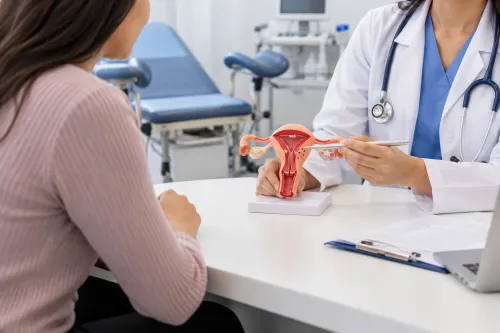
A first male fertility consultation in Nashik should assess both partners, not test the man in isolation. Fertility depends on ovulation, sperm, intercourse timing and both partners’ medical history, so the female partner should be assessed in parallel.
Expect questions about:
- How long you have tried, intercourse frequency and timing, and previous pregnancies
- Childhood illnesses, testicular infections or injuries, surgeries and medications
- Sexual function, including erectile or ejaculatory difficulty
- Smoking, alcohol, recreational drugs, anabolic steroids and testosterone injections or gels
- Occupational heat, solvents, pesticides or other toxin exposure
Seek a male fertility evaluation in Nashik after 12 months of trying if the female partner is under 35, or after six months if she is 35 or older. Go sooner with known testicular disease, previous chemotherapy, erectile or ejaculatory problems, or suspected azoospermia, meaning no sperm in the ejaculate.
Testosterone treatment can suppress sperm production, so disclose every injection, gel or anabolic steroid before treatment is planned.
The examination may include the testes, epididymis and vas deferens, with assessment for a varicocele. The clinician also reviews the female partner’s ovulation, reproductive history and need for parallel testing. Leave with a plan covering semen testing, medication or exposure changes, and any indicated hormone tests.
How to prepare for sperm testing and read the semen analysis
For sperm testing in Nashik, confirm the laboratory’s collection policy before you abstain or collect at home. Follow its requested abstinence period of 2–7 days, use the sterile container supplied or accepted by the laboratory, and avoid lubricants and ordinary condoms unless the laboratory provides a sperm-safe option.
- Collect the entire ejaculate, including the first fraction.
- For home collection, record the exact collection time.
- Keep the container close to body temperature; protect it from heat and cold.
- Deliver it promptly within the laboratory’s stated timeframe.
If the first fraction or any part of the sample is lost, tell the laboratory instead of hiding it. Missing the first fraction can falsely reduce the reported sperm concentration and total sperm number, while delayed transport or temperature extremes can distort a borderline result.
A semen analysis separates several findings:
| Measure | What it describes | Why it matters |
|---|---|---|
| Volume | Amount of semen | Low volume can affect interpretation |
| Concentration | Sperm per millilitre | Low numbers differ from no sperm |
| Total sperm number | Sperm in the whole sample | Combines concentration with volume |
| Progressive motility | Sperm moving forward | Relevant to reaching the egg |
| Total motility | Moving sperm, forward or not | Broader movement measure |
| Morphology | Sperm shape and structure | Abnormal forms can reduce function |
| Vitality | Live sperm percentage | Distinguishes living from non-moving sperm |
| pH | Acidity or alkalinity | Can support assessment of glands or infection |
| Leukocytes | White blood cells | May indicate inflammation |
| Agglutination | Sperm clumping | Can interfere with movement |
Fever, recent illness, incomplete collection and medication changes can alter results. One abnormal analysis does not establish permanent infertility; repeat it about one month later when the first result is abnormal.
Which tests explain a low count, severe abnormality or no sperm?
A low count, severe abnormality or no sperm does not trigger every test. The next step in a male fertility evaluation in Nashik depends on the semen pattern, symptoms and examination findings.
Hormone testing usually starts with a morning total testosterone and follicle-stimulating hormone (FSH). Add luteinizing hormone (LH) and prolactin when low libido, erectile difficulty, testicular shrinkage or other findings suggest endocrine disease; order thyroid testing when symptoms or examination make thyroid disease relevant.
Urinalysis looks for urinary inflammation or infection. Request a semen culture when infection is suspected, such as raised leukocytes, pain, discharge or fever. A scrotal examination checks testicular size, the epididymis, vas deferens and a palpable varicocele; scrotal ultrasound helps assess a suspected varicocele, mass or other testicular abnormality.
These tests are targeted, not automatic parts of every round of sperm testing in Nashik.
Obstructive azoospermia means sperm production may continue, but a blockage prevents sperm entering the ejaculate. Impaired production means the testes are making too few or no sperm.
| Finding | More consistent with obstruction | More consistent with impaired production |
|---|---|---|
| Testicular size | Often preserved | Small or atrophic testes |
| Hormones | FSH often not elevated | FSH often elevated |
| Clues | Vasectomy, groin or scrotal surgery | Testicular injury, illness or toxic exposure |
With azoospermia or sperm concentration below about 5 million/mL plus elevated FSH or small testes, discuss genetic counselling, karyotype testing and Y-chromosome microdeletion testing with a specialist.
How male infertility treatment is matched to the cause
Cause-led treatment avoids wasting months on supplements. A clinician may treat infection, relieve an obstruction, correct an endocrine disorder, or review a medicine that harms sperm. Testosterone injections, gels and anabolic steroids suppress pituitary signals and can sharply reduce or stop sperm production; they are not fertility treatments.
Tell the specialist about every exposure, and do not stop prescribed treatment alone.
1. Repair a varicocele when it is palpable on examination, the couple is trying to conceive and semen parameters are abnormal. An ultrasound-only, non-palpable varicocele is not routinely repaired because imaging alone does not prove it is causing infertility.
2. If low count or motility persists, select treatment using both partners’ findings, infertility duration and semen results.
| Option | What it does | When it fits |
|---|---|---|
| Timed intercourse | Uses the fertile window | Motile sperm are adequate and there is no major female-factor barrier |
| IUI | Places prepared sperm in the uterus | Mild-to-moderate male-factor infertility |
| IVF | Fertilises eggs in a laboratory | Multiple factors or failed simpler treatment |
| ICSI | Injects one sperm into an egg | Very low usable sperm or a fertilisation problem |
ICSI is not automatically required for every abnormal semen analysis. Antioxidant supplements have inconsistent evidence, variable quality and possible medicine interactions; they should not delay effective treatment.
Before chemotherapy, radiotherapy, sperm-damaging testicular surgery or similar treatment, discuss cryopreservation promptly. Bank several ejaculated samples before treatment rather than waiting for post-treatment testing. Male infertility treatment in Nashik should follow a demonstrated cause and a clear preservation or conception plan.
How to choose a male fertility service and leave the first visit with a plan
Choose a service by what happens before and after the vial, not simply by test availability.
Ask whether the laboratory follows current WHO semen-analysis procedures, holds ISO 15189 or NABL accreditation, identifies samples with two patient identifiers, controls collection-to-laboratory temperature and transport time, and has abnormal results reviewed by a reproductive urologist or qualified fertility specialist. Accreditation supports laboratory quality; it does not guarantee a diagnosis or pregnancy.
A male fertility consultation in Nashik should assess the couple, not test the man in isolation. Ask for a written plan covering:
- Whether an abnormal result requires a second semen analysis, usually about one month later.
- Which medicines, testosterone products, anabolic steroids, smoking, alcohol, heat or chemical exposures need review.
- Whether morning hormones or genetic testing are justified by the findings.
- Whether the female partner needs simultaneous evaluation.
- The date and clinician for results discussion.
| Check before booking | What a complete service provides | Risk if missing |
|---|---|---|
| Laboratory quality | WHO procedures, ISO 15189 or NABL status, secure identification and controlled transport | A difficult-to-interpret result |
| Clinical interpretation | Review by a reproductive urologist or qualified fertility specialist | A number without a diagnosis |
| Follow-up | Repeat-test decision, treatment pathway and scheduled review | Testing without a plan |
Bagul Nursing Home & Dr. Bagul’s Hope IVF Center can be considered when comparing a male fertility service in Nashik, after you confirm how it coordinates couple assessment, laboratory testing, specialist review and follow-up.
Related services
Fertility Solutions and Treatment Fertility Solutions and Treatment Fertility Solutions and Treatment A couple willing to have a baby and experiencing difficulty in the same is treated and investigated for the same. View service → |
Basic Fertility Services Fertility Consultation & Evaluation Ovulation Induction Follicular Monitoring Hormonal Profiling Semen Analysis Diagnostic Hysteroscopy & Laparoscopy View service → |
Frequently asked questions
What happens during a first male fertility consultation in Nashik?
The doctor reviews both partners’ medical histories, fertility duration, intercourse timing, medications and prior investigations, then plans examination and testing for each partner.
How should you prepare for sperm testing?
Avoid ejaculation for 2–7 days, collect the complete sample in a sterile container, keep it near body temperature and deliver it within the laboratory’s stated time.
What does a semen analysis measure?
A semen analysis measures semen volume, sperm concentration, total sperm number, motility and morphology, along with findings such as round cells or agglutination.
Which tests investigate very low or absent sperm?
The evaluation can include repeat semen analysis, hormone tests such as FSH and testosterone, a physical examination, scrotal ultrasound, genetic testing and post-ejaculatory urine testing when indicated.
How is male infertility treatment matched to the cause?
Treatment depends on the finding and may include correcting medication or lifestyle factors, treating infection, surgery for selected conditions, hormone treatment for hormone deficiency, IUI or IVF with ICSI.
Keywords