
For couples beginning to explore IVF treatment, the terminology surrounding fertility care can initially feel complicated. In vitro fertilisation is not a single procedure performed in one appointment. It is a sequence of carefully coordinated stages designed to support fertilisation and early embryo development outside the body before an embryo is transferred to the uterus.
Understanding these stages can help couples in Nashik approach fertility consultations with clearer expectations.
What Is IVF Treatment?
IVF stands for in vitro fertilisation. Eggs are collected from the ovaries and combined with sperm in a laboratory setting. Fertilised eggs are then monitored as they develop into embryos.
An embryo considered suitable for transfer may subsequently be placed into the uterus. Depending on the treatment plan, additional suitable embryos may be cryopreserved for possible future use.
The exact protocol can vary considerably between patients.
Stage 1: Fertility Assessment
IVF should begin with evaluation rather than immediately with ovarian stimulation.
The fertility team may review:
- Age and reproductive history
- Previous pregnancies or fertility treatments
- Menstrual cycle characteristics
- Ovarian reserve indicators
- Ultrasound findings
- Semen parameters
- Fallopian tube or uterine factors
- Relevant medical conditions
These findings help determine whether IVF is appropriate and how the treatment cycle may be planned.
Stage 2: Ovarian Stimulation and Monitoring
In a natural menstrual cycle, the ovaries commonly release one mature egg. During IVF, medications are generally used to encourage multiple follicles to develop.
The response needs monitoring.
Ultrasound examinations and, where indicated, hormonal testing help the fertility team assess follicular development. Medication doses and the timing of subsequent steps may be adjusted according to the individual response.
Stage 3: Egg Retrieval
When follicles have reached an appropriate stage, medication is used to support final egg maturation.
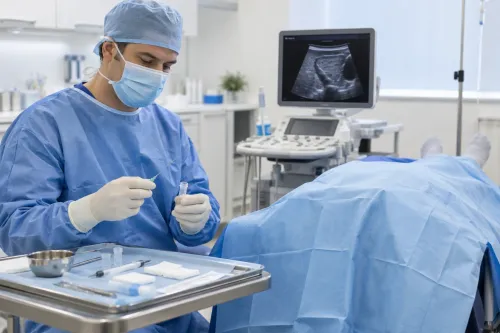
Egg retrieval is then scheduled. The eggs are collected from the ovarian follicles using an ultrasound-guided procedure under appropriate clinical care.
The number of eggs retrieved varies from patient to patient and should not be interpreted in isolation as a prediction of the final outcome.
Stage 4: Fertilisation and Embryo Development
Retrieved eggs are assessed in the laboratory and exposed to prepared sperm.
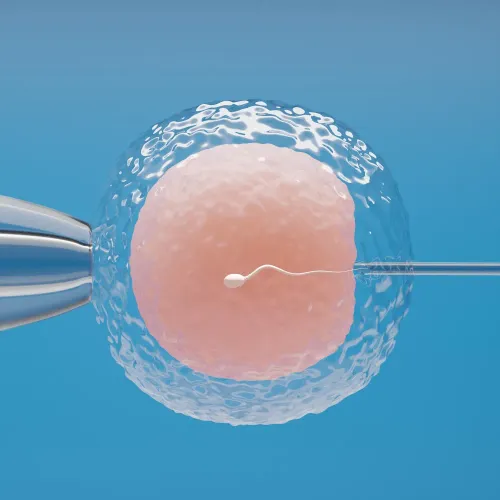
Conventional IVF allows sperm to interact with the egg in the laboratory. In certain circumstances, ICSI may instead be recommended, where an individual sperm is injected directly into a mature egg.
Embryos that develop are monitored during the following days.
Stage 5: Embryo Transfer
Depending on embryo development and the treatment strategy, an embryo may be transferred during the same treatment cycle or frozen for transfer in a later cycle.
The decision can depend on embryo development, uterine lining, hormonal findings and other clinical considerations.
A pregnancy test is performed after the appropriate waiting period following transfer.
Is IVF Appropriate for Every Infertility Diagnosis?
No.
Some couples may be suitable for simpler interventions, while others may have circumstances where IVF provides a reasonable treatment option. Tubal problems, certain male-factor infertility cases, age-related fertility considerations, endometriosis or unsuccessful previous treatments are among the situations that may lead to an IVF discussion.
For couples considering IVF in Nashik, Bagul Nursing Home and Dr. Bagul’s Hope IVF Center provides fertility evaluation and treatment planning based on individual reproductive findings.
Understanding the IVF process before treatment helps couples ask better questions about medications, fertilisation methods, embryo development and transfer planning. More importantly, it reinforces that an IVF plan should be individualized rather than treated as an identical protocol for every patient.